
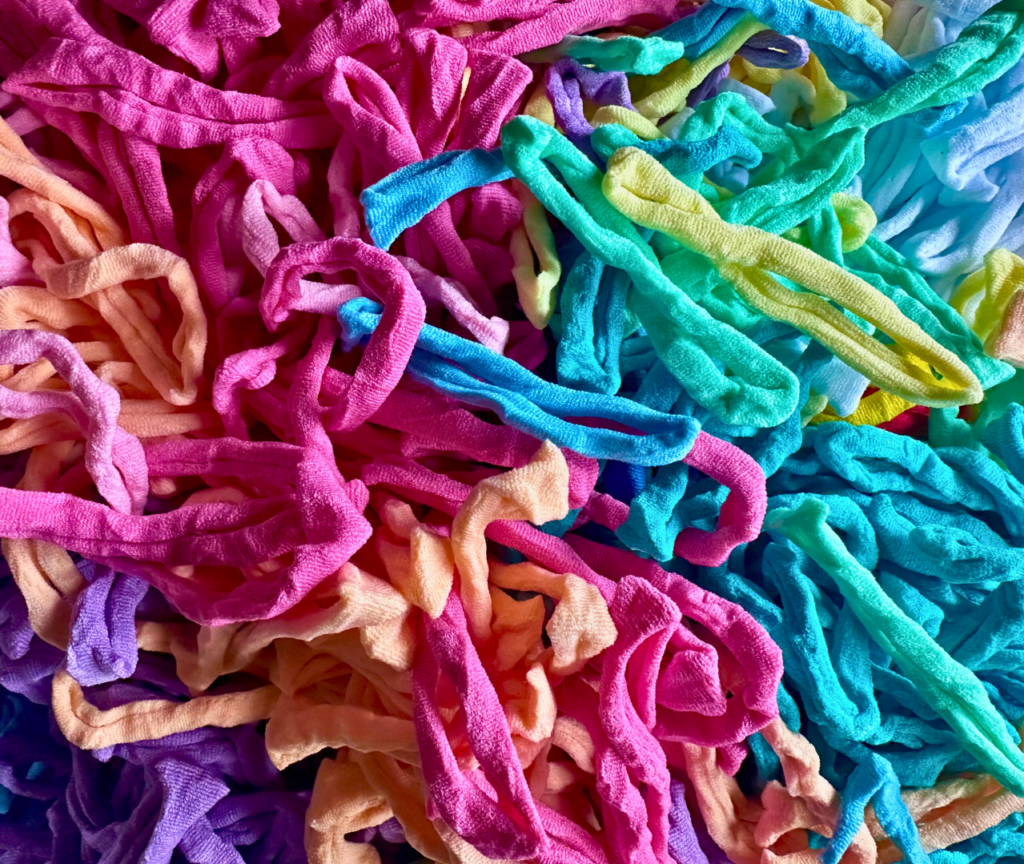
If you’ve ever stood in a craft aisle staring at refills, you’ve probably wondered:
Does it actually matter which loops I buy?
Short answer: yes.
The type of potholder loom loops you choose affects how your finished square feels, how it performs in the kitchen, and even how easy it is to weave.
Here’s what you need to know about cotton vs. polyester loops – and which might be best for you.
Cotton Potholder Loom Loops
Cotton is the traditional option and often the preferred choice for adults making functional potholders.
Why Choose Cotton?
- Heat resistant – better for actual kitchen use
- Sturdier feel – holds structure well
- Less stretch – easier to maintain even tension
- Natural texture – more muted, classic finish
If you’re making potholders that will handle hot pans, cotton is the safer and more practical choice.
Brands like Harrisville Designs are well known for high-quality cotton loops in a wide range of colors.
What to Know About Weaving Cotton
- It has less give, so don’t pull too tight.
- Tension consistency matters more because it won’t “bounce back.”
- It creates a thicker, more structured finished square.
Cotton tends to look slightly more polished when finished.
Polyester Potholder Loom Loops
Polyester loops are common in budget refill packs and brightly colored kits.
Why Choose Polyester?
- Brighter colors
- Softer feel
- More stretch
- Often less expensive
They’re perfectly fine for decorative projects, kids’ crafts, or items that won’t be exposed to high heat.
What to Know About Weaving Polyester
- They stretch more easily, so it’s easier to pull too tight.
- Uneven tension shows more because the material flexes.
- They can feel slightly looser once removed from the loom.
Polyester is great for:
- Wall art panels
- Mug rugs
- Practice squares
- Kids learning to weave
But for true kitchen use, cotton is usually better.
Cotton vs. Polyester: Quick Comparison
| Feature | Cotton | Polyester |
| Heat resistance | High | Low |
| Stretch | Minimal | Moderate |
| Structure | Firm | Softer |
| Color brightness | Natural tones | Very bright |
| Best for | Functional potholders | Decorative projects |
Where to Buy Potholder Loom Loops
You have several options, depending on what you’re looking for.
Amazon
Amazon carries bulk refill packs in both cotton and polyester, along with starter kits. This is often the easiest option for quick delivery and color variety.
Etsy
Etsy is great for:
- Handmade cotton loops
- Specialty-dyed color palettes
- Vintage loop refills
- Small-batch sellers
If you’re linking to Etsy, curated color bundles often perform well.
Direct from Manufacturers
Buying directly from manufacturers like Harrisville Designs ensures you’re getting true cotton loops designed specifically for heat-safe potholders.
Local Craft Stores
Most major craft retailers carry refill packs, though fiber content varies – always check the label.
Tips for Using Potholder Loom Loops
No matter which material you choose, these tips will help:
• Don’t overstretch when placing loops.
Stretching too tightly at the beginning leads to warped edges later.
• Keep your tension consistent.
Even tension matters more than tight tension.
• Store loops flat.
If loops get twisted or overly stretched in storage, they’re harder to work with.
• Mix materials thoughtfully.
Avoid mixing cotton and polyester in the same potholder – they behave differently under tension and heat.
• Buy extra of colors you love.
Nothing is more frustrating than running out mid-project and not being able to match dye lots later.
So Which Should You Choose?
If you’re making potholders for actual kitchen use:
→ Choose cotton.
If you’re experimenting, decorating, or crafting with kids:
→ Polyester works just fine.
If you’re just getting started, try both once. The difference becomes obvious as you weave.
And if you’re new to potholder looms in general, start with my complete guide to the potholder loom for adults to understand setup, tools, and finishing techniques first.