
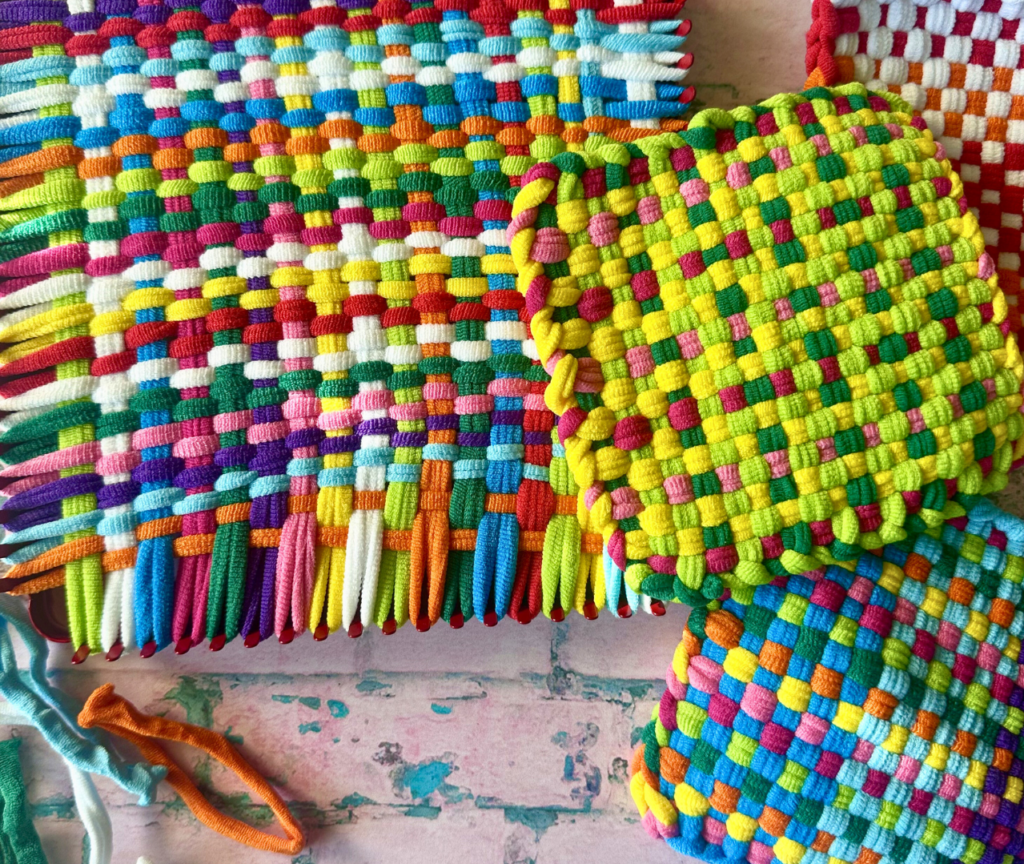
If you’ve ever thought a potholder loom was just a kids’ craft, it’s time to reconsider.
A potholder loom for adults is one of the simplest, most inexpensive, and surprisingly meditative ways to log off a little and make something with your hands.
No patterns required.
No prior fiber skills needed.
No giant investment.
Just a loom, a pile of loops, and a little quiet.
My mom bought one to do with the grandkids when they were younger and just before she passed, she started talking about getting another one for herself because she loved to make them. Now I see why.
What Is a Potholder Loom?
A potholder loom is a small square frame with pegs around the edges. You stretch fabric loops vertically across the pegs, then weave additional loops horizontally to create a woven square. The final step loops the edges together to secure everything in place.
The result? A thick, sturdy fabric square you can actually use.
Many adults prefer a sturdy metal version because they hold tension better than lightweight plastic looms.
But the real appeal isn’t the tool – it’s the rhythm.
Stretch.
Weave.
Over. Under. Repeat.
It’s structured enough to focus your mind, but simple enough that it never feels overwhelming.
Potholder Looms Aren’t Just for Kids
Yes, many of us used one at a kitchen table when we were eight.
But as adults, the experience feels different.
The repetitive weaving motion is calming. The color choices are creative without being complicated. You can make something useful without turning it into a productivity contest.
A potholder loom for adults works because:
- It’s affordable
- It’s portable
- It doesn’t require constant instruction
- It gives you a finished result in under an hour
It’s a great, inexpensive, meditative way to log off a little and make something – especially if you’re trying to reduce screen time without picking up a complicated hobby.
Basic Supplies You’ll Need
You truly don’t need much:
- A potholder loom
- Fabric loops
- A small hook (often included)
That’s it.
No yarn winding.
No measuring.
No counting stitches.
Simple Potholder Loom Tips for Better Results
If you want clean edges and a square that doesn’t warp, a few potholder loom tips make a big difference:
• Choose a metal loom.
It’s not even an investment – mine was $7 – but they’re sturdier and hold shape better over time.
• Keep steady tension while weaving.
Don’t overstretch loops when placing them, but don’t leave them slack either.
• Maintain tension when removing the potholder.
Use paper clips along the finished edge as you go so loops don’t loosen before they’re secured.
• Let it rest before removing it.
Leave the potholder on the loom for a bit to settle and square up before taking it off.
• Use a crochet hook to remove loops.
You don’t have to know how to crochet – it’s simply less fiddly than using your fingers.
If you want a full troubleshooting guide, I go deeper into common mistakes and fixes in my detailed potholder loom tipspost.
Other Things You Can Make with a Potholder Loom
Despite the name, you’re not limited to potholders.
Once you start joining squares together, a potholder loom becomes a simple fabric-making tool.
You can create:
- Mug rugs
- Wall art
- Trivets
- Floor rugs (by joining multiple panels)
- Tote bag panels
Each woven square becomes a building block. Keep it simple, or build something larger over time.
I share more project ideas in my guide to other things you can make with a potholder loom.
Choosing the Right Loops
Not all loops are the same.
Most fall into two categories:
- Cotton – better for heat resistance and true kitchen use
- Polyester – brighter colors and slightly stretchier
If you’re making functional potholders, cotton is usually the better option. Polyester works well for decorative projects.
You can find loops at craft stores, online retailers, or directly from manufacturers like Harrisville Designs.
I break down cotton vs. polyester loops (and where to buy them) in a separate guide if you want more detail.
Where to Find Patterns and Inspiration
You don’t need patterns to get started – simple stripes are beautiful.
But if you want design inspiration, you can explore:
- Manufacturer websites
- Craft communities like Ravelry
- Pinterest boards
- Vintage pattern leaflets
I’ve gathered pattern resources in a dedicated potholder loom patterns post to make it easier to explore.
A Craft That Doesn’t Ask Much From You
A potholder loom won’t demand perfection. It won’t require hours of learning. It won’t sit half-finished for months.
It’s small.
It’s manageable.
It’s useful.
And in a world that constantly pulls your attention outward, that’s reason enough to give it a place on your table.
If you’re looking for a simple way to log off a little and make something, a potholder loom for adults might be exactly the right place to start.