
There was a time when phones didn’t follow you around.
They lived in one place.
Usually the kitchen with a cord. Thats where ours was initially – before the cordless phone.
The cord was long enough to stretch into the hallway if you really needed privacy but not much further. Most everything you said was right there in front of your mom as she cooked dinner. The code words we created!
But my point is, If you wanted to use the phone, you had to go to it. And when you were done… you left it there.
Somewhere along the way, that flipped.
Now your phone:
- Lives in your hand
- Sits next to you on the couch
- Follows you from room to room
- Comes with you to the bathroom (I’m proud to say this isn’t me, but many people do…)
It’s not just a tool anymore, it’s a constant presence.
And that’s why it’s so hard to “use it less.”
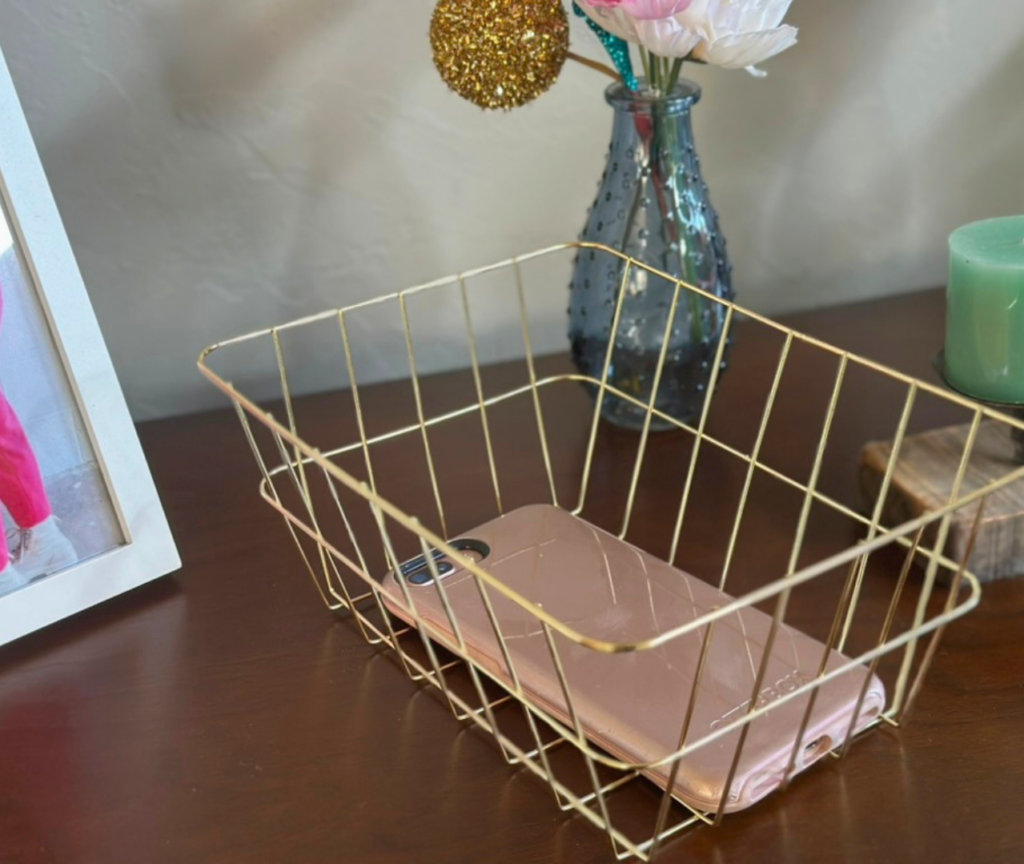
Enter: The Phone Parking Lot
This is exactly what it sounds like:
A designated place where your phone lives during certain parts of the day.
Not in your pocket.
Not in your hand.
Not within arm’s reach.
If you want to use it—you go to it. Just like you used to in the good ole days 😀
Why This Works (When Nothing Else Does)
Most screen time habits aren’t about intention. They’re about proximity.
You don’t think:
“I would love to scroll right now.”
You think:
“My phone is already in my hand… might as well check something.”
The Parking Lot breaks that loop. It adds just enough friction to interrupt the reflex.
Not enough to be annoying, just enough to make it a choice.
How to Set Up Your Phone Parking Lot
1. Pick a Physical Spot
Make it specific.
- Kitchen counter
- Entryway table
- A basket or drawer
- Charging station
Somewhere visible, but not attached to you.
Side note here: I have kids and when those kids need me, I want to be there. So not having my phone near by gave me panic at first. I fixed this by making sure my volume is all the way up and I also wear my apple watch so I don’t miss their calls and texts.
2. Give It Clear “Hours”
This works best when it has structure. Eventually, it will feel so good when you get to the point that you just leave it in its place all the time when you’re home, but until then:
Try:
- During work blocks
- During meals
- Evenings after a certain time
- Weekend chunks
You’re not banning your phone, you’re giving it boundaries.
3. Let It Be Slightly Inconvenient
This is the whole point.
You have to:
- Stand up
- Walk over
- Pick it up intentionally
This is best implemented when you go to your phone and use it there.
4. Expect the Phantom Reach
You will:
- Pat your pocket
- Reach next to you
- Feel like something is missing
That’s not a problem, that’s awareness and as uncomfortable as it is, it will lessen with time.
5. Don’t Turn It Into a Rule You’ll Break
If you need your phone, go get it.
The goal isn’t restriction, but it IS breaking the automatic loop.
What Changes (Quietly, Over Time)
You start to notice:
- You reach for your phone less
- You finish thoughts without interruption
- You sit longer without needing input
- You’re a little more present (without trying to be)
Not because you forced it. Because your phone stopped living in your hand.
This Is Less About Discipline, More About Design
You don’t need to “try harder.” You just need your phone to stop being the easiest option in the room.
The Parking Lot does that. It puts your phone back where it belongs: available and useful, but not in charge of you.