If you’ve ever started a loom knitting project and thought, “why does this feel harder than it should?”—your yarn might be the problem.
When it comes to loom knitting blankets, the yarn you choose makes a huge difference in:
- How easy it is to knit
- How your stitches look
- How fast your project works up
- Whether you actually finish it
After a lot of trial and error, I’ve found that sticking with the right yarn weights (and types) makes everything smoother.
The Best Yarn Weight for Loom Knitting Blankets
If you want your life to be easier, stick with:
- Medium (Weight 4)
- Bulky (Weight 5)
These are the sweet spot for blanket projects on an afghan loom like the Authentic Knitting Board Afghan Knitting Loom.
Why Weight 4 & 5 Work Best
- Easy to work with (not too thin, not too thick)
- Stitches form cleanly on the loom as the pegs are spaced to accomodate these sizes
- Projects move at a reasonable pace
- Widely available in tons of colors and styles
If you go thinner (like weight 3), your blanket will take forever and have a lot of gaps.
If you go thicker (like weight 6), it can get bulky and harder to manage on the loom and when you’re turning loops, you may knock off the next one.
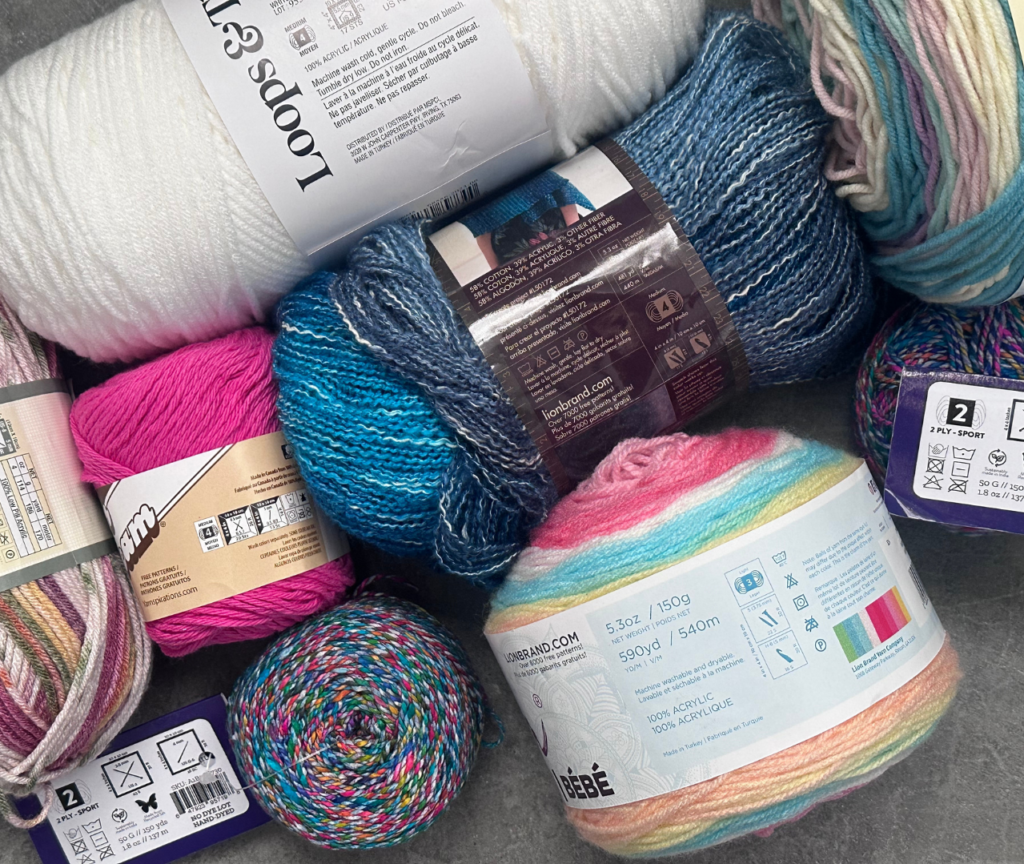
My Favorite Yarn Type: Self-Striping Yarn
If you want your blanket to look impressive without extra effort, self-striping yarn is the move. In the images I’ve used Caron Boysenberry – I hope that it is still being produced by the time you read this. I also really love the Mandala yarns – they function like a very thick 4 or a very light 3 but they work up beautifully.
Why I Love It
- Automatically changes colors as you knit
- No need to weave in a million ends
- Creates a polished, patterned look
- Perfect for beginners
This is especially great for loom knitting because you can focus on your stitches – not managing color changes every few rows.
Other Great Yarn Options for Loom Knitting
If self-striping isn’t your thing, here are other solid options:
Solid Color Yarn
Best for:
- Clean, minimal blankets
- Color-blocking projects
Tweed or Speckled Yarn
Best for:
- Adding texture and visual interest
- Hiding small inconsistencies in stitches
Acrylic vs Cotton vs Blends
- Acrylic: Affordable, easy to work with, great for beginners
- Cotton: Less stretchy, can be harder on hands but very durable
- Blends: A nice balance of softness and structure
For most blanket projects, acrylic or acrylic blends are the easiest place to start.
Yarn to Avoid (Especially for Beginners)
Not all yarns play nicely with looms.
Try to avoid:
- Super thin yarn (takes forever, harder to control)
- Super bulky yarn (can be awkward on pegs)
- Splitty yarn (frustrating to work with)
- Novelty yarns (fun, but not beginner-friendly)
If your yarn is fighting you, it’s going to slow you down fast.
How to Change Colors in Loom Knitting
If you’re not using self-striping yarn, you may eventually want to switch colors.
Good news – it’s simple.
Basic Color Change Method:
- Finish your last stitch with your current yarn
- Tie or attach your new yarn to the working yarn
- Continue knitting with the new color
- Weave in ends later with a yarn needle
That’s it.
Tips for Cleaner Color Changes:
- Leave a short tail (don’t cut too close)
- Keep tension consistent when switching
- Weave in ends securely at the end
Color changes don’t have to be complicated—you don’t need advanced techniques to make something look good.
How Much Yarn Do You Need for a Blanket?
This depends on:
- Blanket size
- Yarn weight
- Stitch pattern
But a general guideline:
- Baby blanket: 3–5 skeins
- Throw blanket: 6–10 skeins
- Full-size blanket: 10+ skeins
When in doubt – buy extra. Running out mid-project is the worst.
Final Thoughts: Choosing the Right Yarn
If you want loom knitting to feel easier (and more enjoyable), start with the right yarn.
Stick with:
- Weight 4 or 5
- Easy-to-work textures
- Colors or patterns you actually like
And if you want the biggest visual payoff with the least effort?
Self-striping yarn is hard to beat.
When paired with a loom like the Authentic Knitting Board Afghan Knitting Loom, the right yarn can turn a simple project into something that looks way more advanced than it actually is.